
Finding Alameda County Residents
A good Alameda County residents directory search separates the question from the record. An address points to the Parcel Viewer and the assessment roll, while an owner name leads into the Clerk-Recorder's grantor-grantee index. Court questions go to the Alameda Superior Court portal. Family history may surface in Oakland directories, voter registers, obituaries, or census pages. None of these lists every current occupant.
The best first pass keeps a parcel, a person, and a record event distinct. The assessor links a site address to an APN. A deed names the parties to a transaction. A voter system verifies one person's own registration or supplies approved files for a permitted purpose. A directory shows a householder near its publication date. The clues can agree. They still cannot prove that every person in a household lived there.
- Start with the name, address, or time period that is already known.
- Use the county property search or Parcel Viewer to identify the APN and exact situs address.
- Translate that property clue into an owner name before searching the deed index.
- Use the court, vital, voter, or state license source that matches the question.
- Move to the library shelf or a focused California Public Records Act request when the online index stops.
Alameda County Records Offices
Alameda County splits its public resident records among offices with different custodial roles. The Clerk-Recorder holds recorded real-property instruments, vital certificates, marriage licenses, fictitious business names, and other filings. The Assessor describes parcels, assessments, maps, and values. The Registrar of Voters handles an authenticated self-service profile, aggregate election data, and restricted voter-file requests. Each answers a narrower question than "residents directory" suggests.
The linked offices are where a result gets verified. A free index is not a certified copy. A filed mailing address is not proof that a person occupies a site. These distinctions matter in Alameda County because a recorder search runs on indexed party names rather than on APN or street address. That name-first design shapes every lookup.
Alameda County Clerk-Recorder
1106 Madison Street
Oakland, CA
(510) 272-6362
Alameda County Assessor
1221 Oak Street, Room 145
Oakland, CA
(510) 272-3787
A public-records question that no website answers can still be scoped to an existing record through the county's public-record request route. The California Public Records Act, Government Code sections 7920.000 and following, does not make every certificate or protected file open. The Clerk-Recorder remains a key stop in an Alameda County residents directory search. Its Alameda County Clerk-Recorder service gateway joins official records with certificates and filing channels. The correct request path depends on the record type. Certificates follow one path. Filings follow another. Names drive the index, not addresses.
The office is the custodian, not a private compilation. Use the office's current instructions for access, copy orders, and protected records.
Alameda County Map to Deed Trail
The county's most reliable modern address path runs map to APN to owner clue to deed index. Search the Alameda County Parcel Viewer by APN, site address, or map selection. Write down the parcel number. Capture the exact situs wording too. Then use the assessment and tax portals for property context before hunting the current owner's name in Official Public Records.
This sequence prevents a common error. The recorder offers no general address or APN browse in its name index. A street phrase cannot substitute for the indexed party. The APN and legal description become the bridge instead. They matter when a street name changes, a mailing city differs, or a historic entry uses another form of the address.
- Parcel
- A mapped unit of land with an APN and assessment history. It is not a list of all people at the site.
- Roll
- A government record set, such as an assessment or voter roll, organized for a stated public function.
- Index
- A finding aid that points to a record or docket. It may show less than the underlying image or file.
- Criss-cross directory
- A historical address-order or telephone-order directory used to connect a house number with a listed householder.
A stable parcel clue unlocks the property tax search. It can check an address or a parcel number. Tax status and mailing information add context, but neither turns the Alameda County residents directory into a confirmed household list.
Why 1969 Splits Alameda County Records
Alameda County's recorded books begin in 1853, the year the county was formed from parts of Contra Costa and Santa Clara territory. The electronic name index starts later, in 1969. That cutoff changes the search method. For 1969 to the present, the portal searches a party name, document type, recording range, instrument number, or book and page. Older records wait in Oakland. From 1853 through 1968, plan counter or mail research through alphabetic grantor-grantee books, microfilm, or a known reel and image.
The official-record index can show an instrument number, book-page reference, recording date, document type, indexed party, associated name, and party-role codes such as grantor or grantee. The situs address may be missing. So may the sale price and APN. A paid image or certified copy is a different product from the free finding aid. Recent filings may need processing time before ordering.
The Official Public Records gateway explains the 1969-present electronic coverage and the older search route. A look at that page helps when a trail crosses the historical boundary. Many Alameda County residents directory searches do.
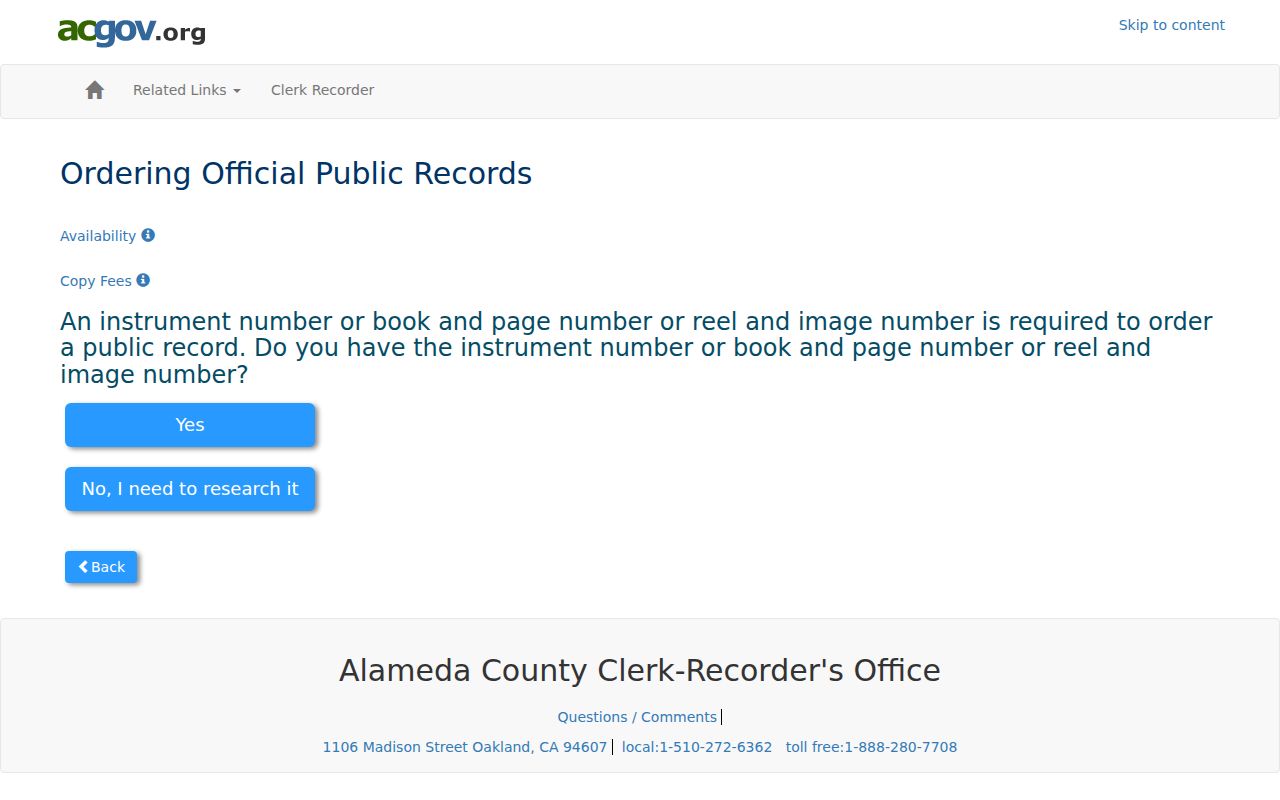
That office has the final word. The Clerk-Recorder remains the source for current search rules, copy fees, and instructions covering older Alameda County records.
Current Alameda County Resident Directories
No single current Alameda County residents directory exists. Several separate record sets fill the role instead. Each covers people, property, or public activity, and the table keeps those meanings apart.
| Source | What It Identifies | Custodian | Access |
|---|---|---|---|
| Assessment and tax search | Parcel, owner or assessee channel, mailing destination, values | Assessor and Treasurer-Tax Collector | Free address or APN search |
| Recorded instruments | Parties to deeds, liens, maps, and related filings | Clerk-Recorder | 1969-present index; older counter or mail path |
| My Voter Profile | One voter's registration, districts, ballot, and vote-by-mail status | Registrar of Voters | Self-lookup with identity fields |
| Superior Court docket | Parties, case numbers, events, and entered dispositions | Alameda Superior Court | Case-type limits; images can require payment |
| State license and business indexes | Filed affiliations, credentials, entity names, and addresses | California agencies | Free basic index, with agency limits |
A property result answers ownership. A court record fits a named party or case event. A historical directory suits a listed householder near a print date. Names drive some searches. When one person must be verified across several records, the Alameda County resident lookup page helps. It keeps the name-first workflow in one place.
Alameda County Voter Status Is Private
Voter status in Alameda County stays private. My Voter Profile is a self-service verification tool, not a public street directory. It asks for a birth date, California driver-license or identification information, and the last four digits of a Social Security number. Only the voter sees the result. The profile can return registration data, a polling place, sample ballot, vote-by-mail status, language preference, and eligible districts.
Approved voter-file requests are a separate channel. California Elections Code sections 2194 and 2188 govern permitted access and use. The county's application asks for the requester, organization, purpose, requested fields, storage controls, and signed declarations. Standard delivery can include a Voter File, optional Participation History, and an optional District File. Participation history notes an election and a voting method. It never records a ballot choice.
Use the right boundary. An absent voter result is not proof that a person lacks a connection to Alameda County. Safe at Home participants, confidential voters, inactive records, and protected fields do not create a casual public directory.
The county's registration statistics and map service show aggregate patterns, never an identified block roster. Keep voter evidence within its stated election purpose.
Alameda County Courts Are County-First
Alameda County courts run county-first, and California provides no statewide trial-court party search that replaces county systems. Alameda Superior Court handles civil, small claims, family, probate, criminal, juvenile, and traffic matters, but access changes by case type. Older references may call the public search DomainWeb. Newer services use eCourt Public Portal. The current Alameda Superior Court online-services page is the entry point.
A party search can return a case number, caption, party name and role, case type, filing date, courthouse, status, register-of-actions entries, hearing information, and an entered disposition. Some limits apply. Sealed cases, juvenile matters, adoption records, confidential attachments, and protected personal data are not fully public. A docket is an index of court activity. It is not proof that every allegation was decided.
Context makes a court result trustworthy. Compare the party role, filing dates, middle name or suffix, and any known address or parcel clue, since public terminals may expose docket detail or viewable images that remote access will not. Documents can require a clerk, an account, a purchase, or a certified-copy request. Federal matters use the Northern District of California and PACER, not the county trial-court portal.
A portal result sometimes stops at an index. The Alameda Superior Court online-services page is the fallback. A court image still belongs to the court. Even so, it can anchor a useful entry in an Alameda County residents directory search.
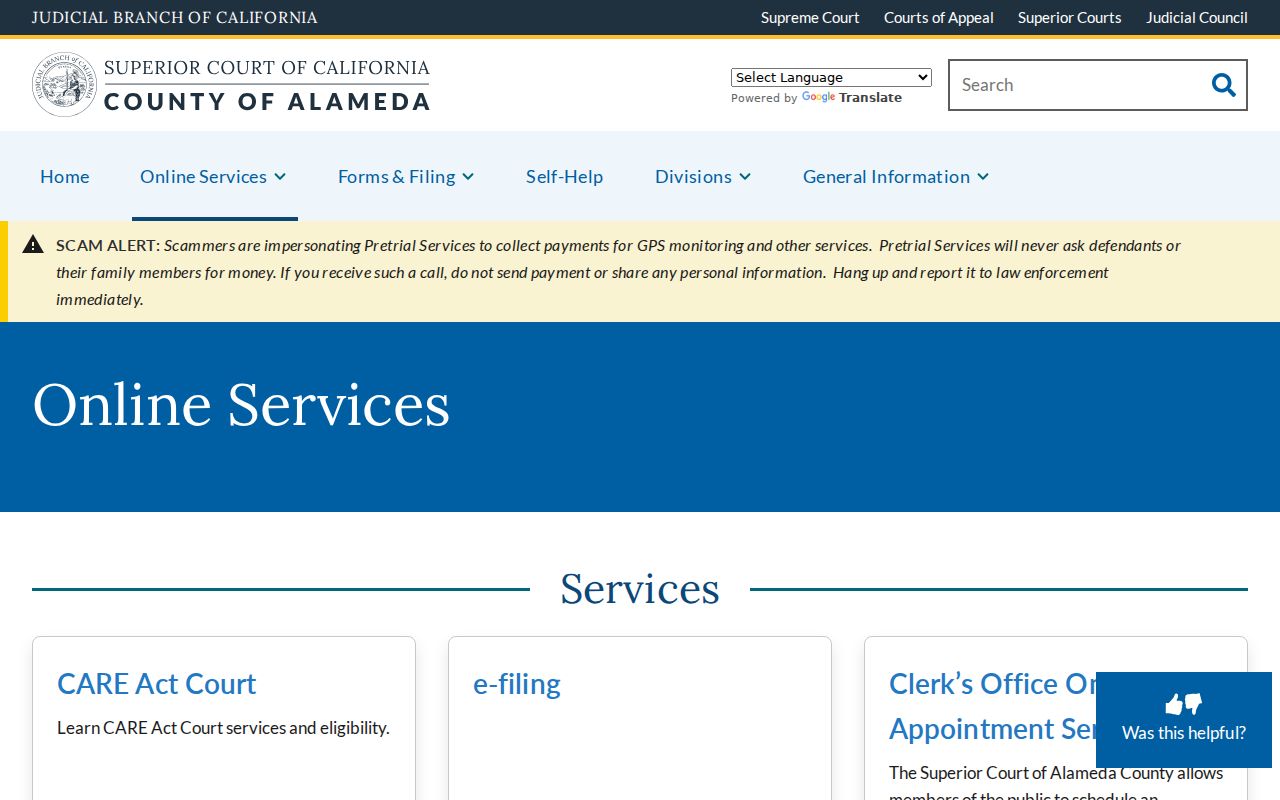
Alameda County case access begins with the court's own online services. The right division matters as much as the starting point.
California Vital Copies in Alameda County
Birth, death, and marriage records sit behind a different access structure than a property index. The Alameda County Clerk-Recorder issues local certificates. Statewide certified copies come from the California Department of Public Health. California uses authorized and informational copies instead of a simple rule that every record opens after a fixed number of years. Health and Safety Code sections 103525 and 103526 limit authorized copies to named categories. Informational copies are marked. They may omit sensitive fields. Confidential marriages stay restricted under Family Code section 509.
A vital application asks plenty. Expect the event type, name on the record, date and place, and parent or spouse names. Requester details, relationship or authorized category, purpose, copies, delivery, signature, and payment complete the form. A certified copy establishes only what the custodian certifies. A public index, obituary, or library certificate can supply a lead without that legal proof.
Historical work has better sources. Oakland History Center holdings include Oakland birth and death certificates from roughly 1870 or 1876 through 1904, plus local obituary files from 1951 through 1993. Those ties reach relatives, occupations, and address trails. For a modern certificate, use the California Vital Records application gateway or the county ordering page. Follow the current eligibility instructions.
Historical Alameda County Resident Directories
Older Alameda County resident directories live mostly at the Oakland Public Library's Oakland History Center. Oakland city directories span 1869 to 1943. Publication gaps dot that run. Missing years include 1919, 1920, 1929, 1931, 1932, 1936, 1942, 1944 through 1966, and 1968. Selected reverse or criss-cross volumes reach from 1936 into later decades. Digitized copies cover 1938, 1940, and 1944. The full year-by-year treatment sits on the Alameda County city directory page.
A printed entry can carry a name and a spouse or widow notation. It may also list an occupation, a residence address, and a business tie. Reverse volumes flip the lookup. An address or telephone clue leads back to the listed householder instead of the other way around. That makes them a working street directory for anyone tracing who lived at a door in a given year.
The historical shelf goes beyond residents directories. Voter registers run 1867 through 1944, and assessor block books cover 1877 through 1925. Selected Sanborn maps span 1882 through 1958, alongside newspapers and obituaries. For a short historical question, the library's holdings often beat a current web roll. The old sources pin a street, house number, and household to one point in time.
The Oakland History Center holdings page names the local-history room and its noncirculating materials. Its gateway image is a useful reminder. A resident directory can be a shelf, not just a search box.
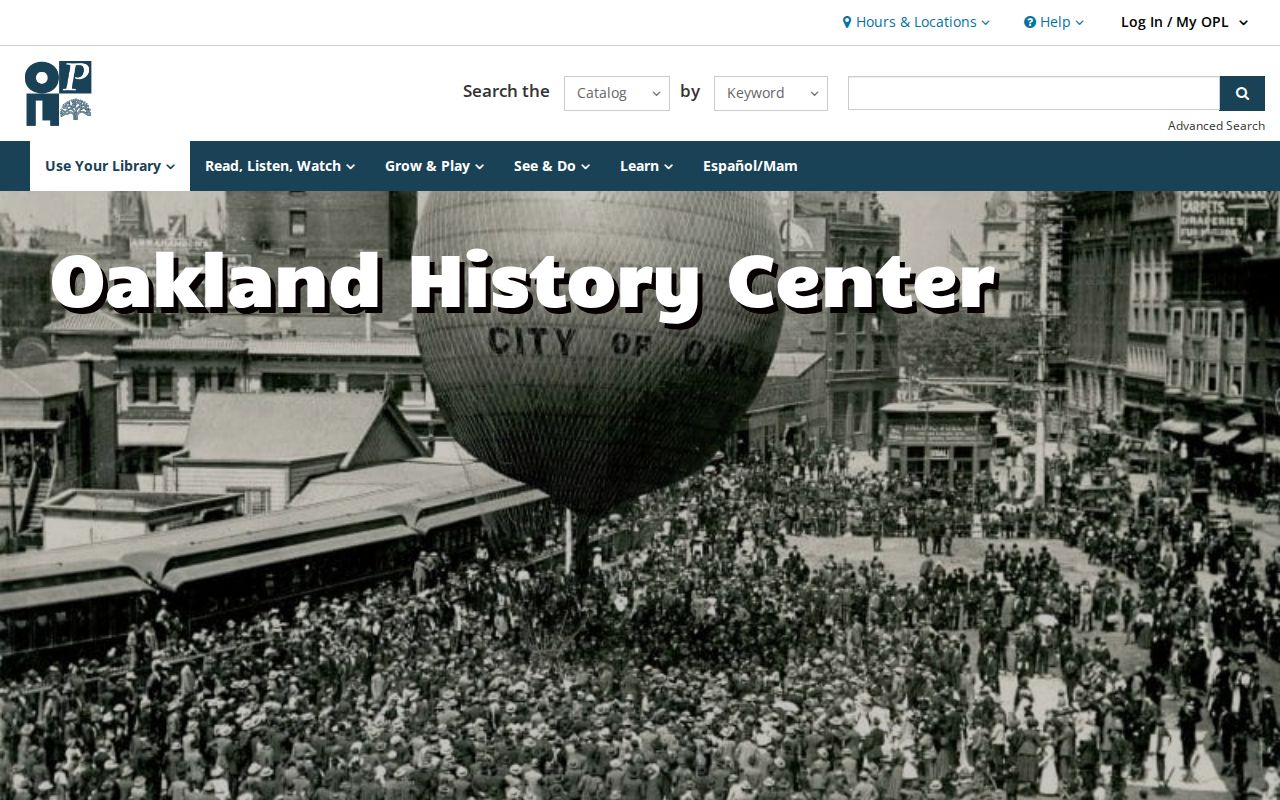
Check the center's current hours, appointment guidance, and service limits before any in-person visit.
Alameda County Heir and Birth-Parent Trails
A name search can serve a family-history purpose. But it should not pretend that one database will reveal a whole life. An heir search in Alameda County starts with a probate case. From there, read the petition, the register of actions, and the public filings. Look for whatever relationship the record itself states. A birth-parent reconnection runs through California's CDSS Mutual Consent Program. It uses form AD 902 and releases contact only when both adult parties consent. CDSS will not search for a person on demand or solicit consent for you.
Classmate and reunion research pairs well with high-school yearbooks and city directories. The Oakland Tribune index and the library's family-history resources help too. The California Genealogical Society sits at 1841 Berkeley Way in Berkeley. Its shelves hold directories, census material, vital indexes, newspapers, manuscripts, and pedigrees. They also hold Alameda obituary forms from 1968 through 1977. Restricted FamilySearch Affiliate images must be viewed onsite.
Business and professional records can add a filed affiliation. Still, an entity address or license address is not proof of a home. Search the California Secretary of State bizfile index for an entity clue. Then label the result accurately for what it is.
The business search screen serves an official filing trail well. It is no substitute for a person record. The Department of Consumer Affairs license search supplies the next image and the current credential fields.
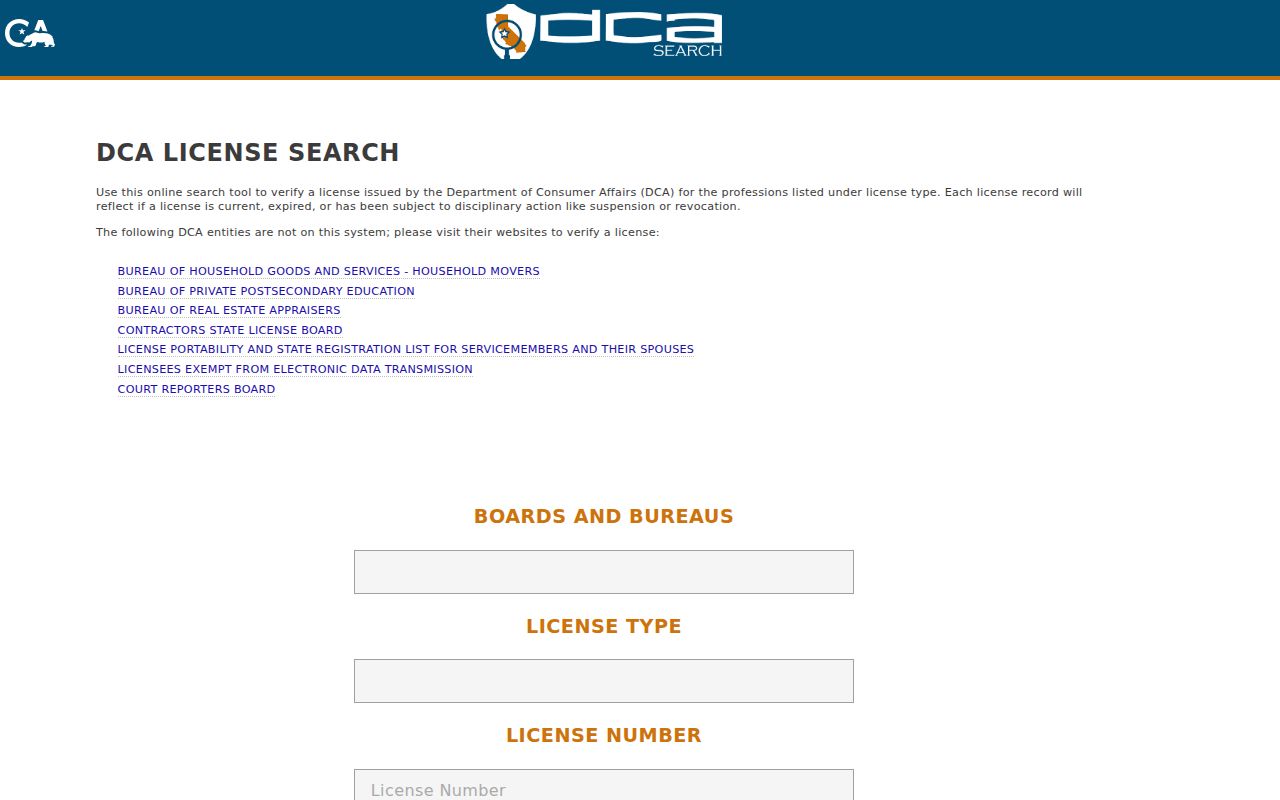
Read a license result for its board, status, credential, and filed address. Apply the same caution about treating any of it as a residence.
Alameda County Public-Records Fallback
No online index answers every focused question. The California Public Records Act offers a request path for an identifiable existing record. Agencies generally get ten calendar days to decide whether a request seeks disclosable records. They may extend that determination by fourteen days for unusual circumstances. The ten-day clock is a determination deadline, not a promise of production.
Describe the custodian and the record type. Give an address or name, a date range, and any known identifier. The county NextRequest service separates ordinary CPRA requests from paid copy products. It also keeps protected certificate channels apart. A request cannot force an agency to build a new compilation. It cannot bypass authorized-copy rules. Nor can it unlock a restricted voter or DMV file into an open Alameda County residents directory.
The Secretary of State CPRA guidance and the California Attorney General's plain-language guide explain the request framework. A county form also states the ten-day determination rule. Keep the question narrow. A custodian who can identify the record is a custodian who can act on it.
Official record research differs from buying a compiled result. A commercial search tool may blend stale or mismatched facts and charge for access. A county, court, library, or state custodian remains the right place to verify a claim. That custodian can also handle a correction request.
Protected Alameda County Addresses
California's Safe at Home program gives an eligible participant a substitute mailing address. It also adds mail forwarding. The program serves survivors of domestic violence, stalking, sexual assault, and human trafficking. Certain health-care and reproductive-service workers qualify too. A confidential voter or substituted address may simply not appear in a normal search. That absence does not mean the person left Alameda County.
The state's privacy system also includes the CPPA DROP service under the Delete Act. DROP launched in January 2026. It lets verified California residents send one deletion request to registered data brokers. Public records, first-party records, and exempt data are not erased. The separate public-record custodians stay responsible for their own correction and confidentiality rules.
The Safe at Home program page explains eligibility and the substitute-address process. Its official wording helps a researcher recognize why an address trail may stop. The gap is not evidence on its own.
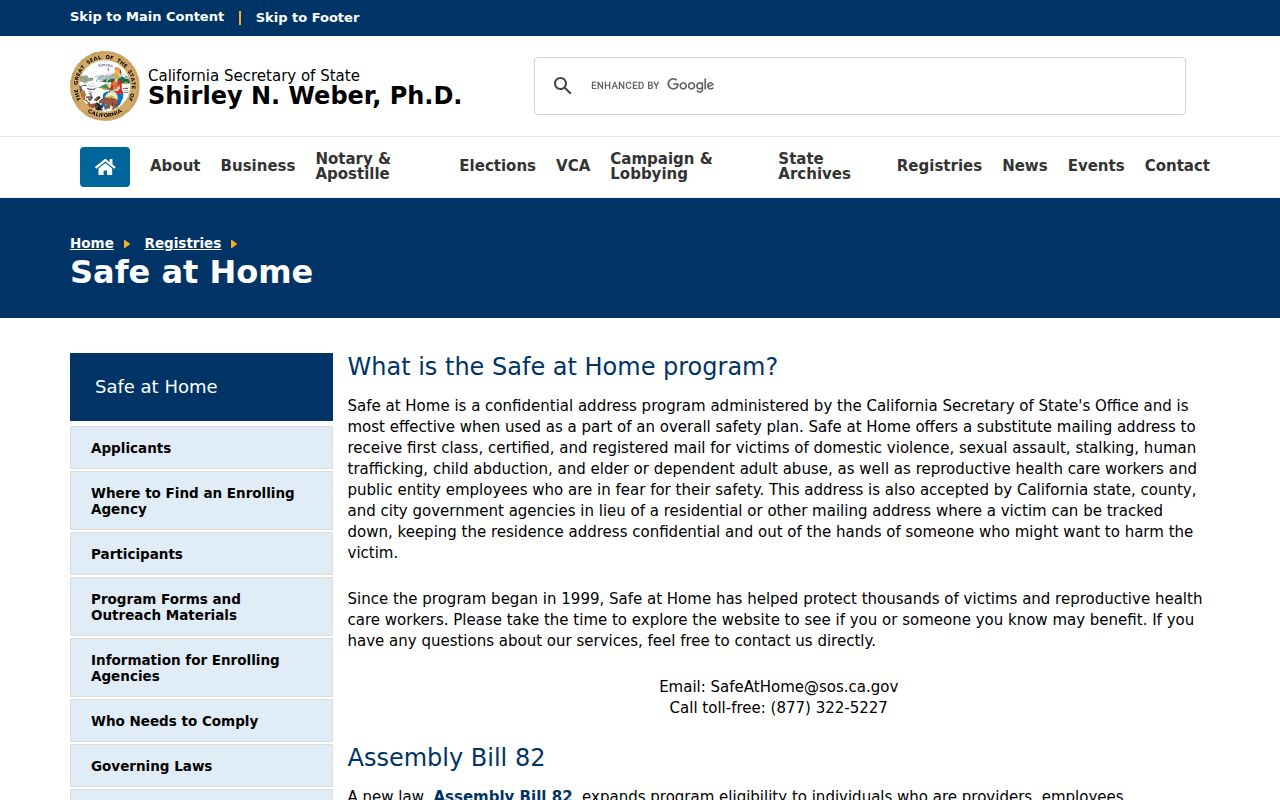
Confidentiality programs exist to protect people. A lawful search should respect the missing data rather than try to work around it.
Alameda County Records in Motion
Alameda County's records are mid-transformation. The county's AB 1466 plan estimates roughly twenty million historic real-estate documents and eighty million images. Only about half were electronic when planning began. Digitization includes OCR plus review of restrictive covenant language. Older material gets preserved along the way. A January 2025 board item put microfilm processing at about 8,000 images per day. The recorder's archive is thus growing fast in searchable form.
A second shift is postal rather than digital. In March 2025, Place Names changed for nearly 29,000 unincorporated addresses. ZIP codes, APNs, taxes, schools, services, and jurisdiction all stayed the same. What moved was the mailing label itself, so an older Hayward line might now read Cherryland. When comparing an old city directory entry against a current address, keep the APN and the legal description as the stable anchors.
Public safety entered the picture in 2023, when the county launched its real-estate fraud notification program. The recorder mails an owner whenever specified real-estate documents record against a property. The mailing encloses the first page and a Fraud Unit contact. That makes the recorder index a useful alert system. It also underscores the gap between a recorded owner and everyone who actually lives at a site. That distinction any residents directory lookup should respect.
The place-name notice and California DROP information both argue for checking live instructions before concluding anything. A careful Alameda County residents directory search logs the date, the custodian, the identifier, the access channel, and the limitation behind every conclusion. The California State Controller unclaimed-property search adds one more dated clue for tying an older owner to an address.
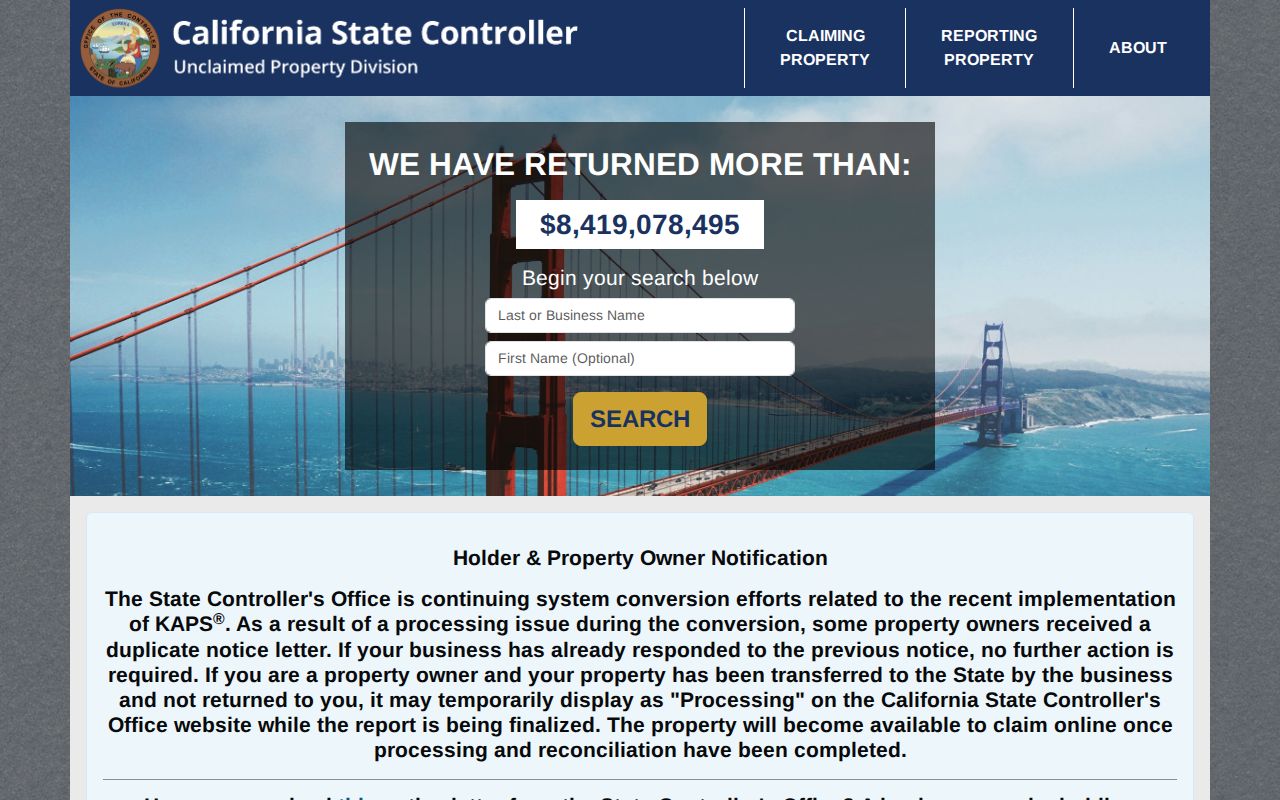
That unclaimed-property search can preserve a past owner and address association. Still, it is only a clue, and any claim demands proof.
Lawful personal use. Public records support genealogy, estate work, civic research, and personal safety awareness. Do not use a record to stalk, harass, intimidate, or harm anyone, and verify important facts with the custodian.