
Alameda County Directory Collections by Era
The Oakland History Center is the main local custodian for an Alameda County city directory search. Its holdings page states that Oakland directories run from 1869 through 1943, with selected later material and digitized links. The collection is not one uninterrupted series, and southern Alameda County has its own titles. The table keeps publisher, date, location, and access together so a researcher does not mistake a later reverse directory for an alphabetic volume.
| Collection | Years | Publisher or Type | Where Held | Access |
|---|---|---|---|---|
| Oakland city directories | 1869-1943 | Langley, Bishop, Husted, Polk-Husted, Polk | Oakland History Center and digital scans | Library, selected online volumes |
| Oakland reverse or criss-cross | 1936, 1953, 1961, 1964-1974, 1995 | Address and telephone order | History Center and later library rooms | Selected years, onsite or scan |
| Haines Oakland and suburban | 1973-1979, 1981-1987, 1989-2020 | Reverse directory | Oakland library collections | In-person research |
| Hayward and San Leandro | 1948-1976, selected years | Polk city and county titles | Local library shelves and guides | Check volume by volume |
| Telephone books | 1914-2013, scattered and annual runs | Subscriber directories | History Center and newspaper room | Historical reference use |
Digitized Oakland volumes include 1938, 1940, and 1944, while early telephone scans include February 1914, June 1916, February 1920 and 1921, September 1922, and October 1923. A telephone book lists subscribers, not every person at an address. A local directory entry also needs to be read as a dated, edited record.
Oakland City Directories, 1869 to 1943
The Oakland run starts in 1869 and closes as a regular series in 1943. The detailed shelf inventory includes Langley's Oakland Directory for 1872/73 and 1875/76; Bishop's volumes for 1877/78, 1878/79, and 1881/82; and Husted's volumes from 1887/88 through several runs ending in 1908/09. Polk-Husted titles cover 1911 through 1916 and 1921 through 1924. Polk titles fill 1925 through 1928, 1930, 1933 through 1935, 1937 through 1941, and 1943, with isolated 1967 and 1969 volumes.
This sequence shows why directory research should record the title page, not just a search-result line. Publisher names change. Some years are bound together. A volume may cover Oakland and nearby suburbs in one edition and use a different scope in another. The first page, introduction, abbreviation key, and street index explain those local choices.
The Oakland History Center's Oakland history collection links the digitized city directory years and describes the reverse-directory runs.
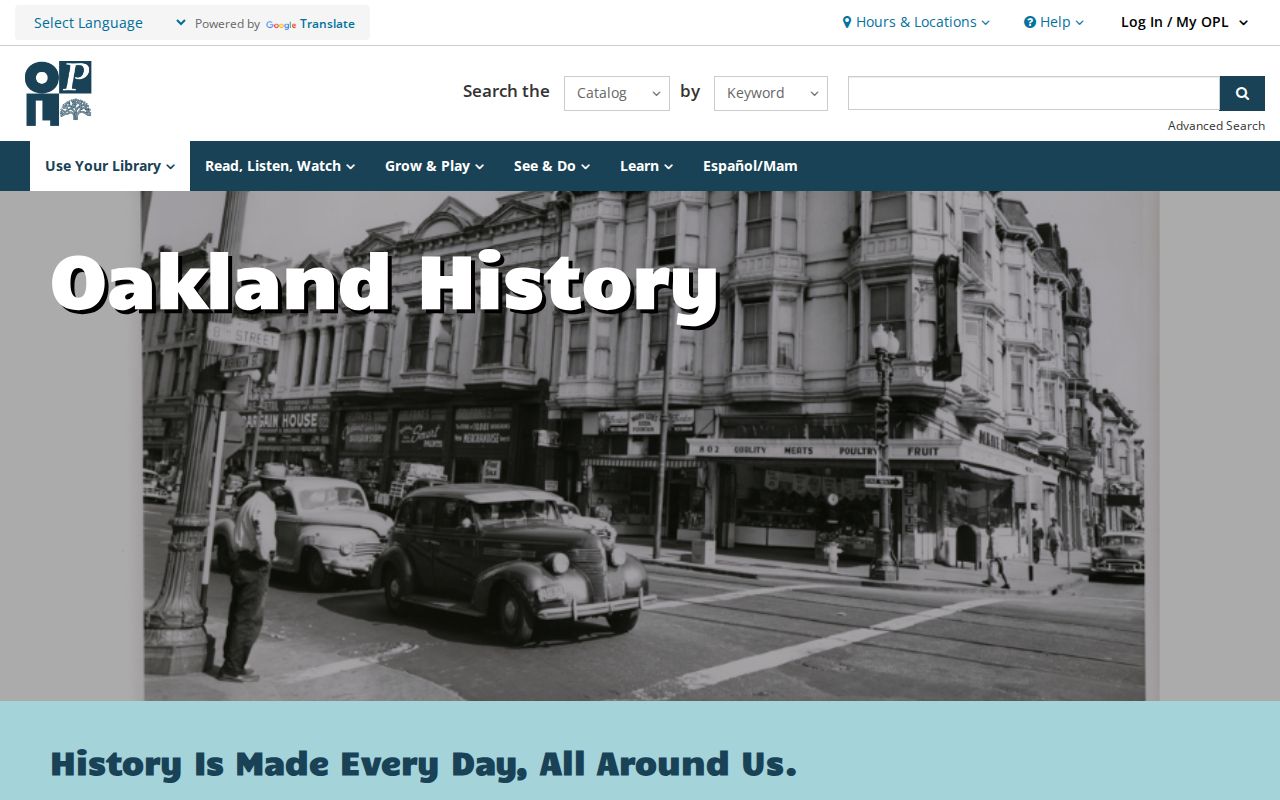
The digitized collection is useful for name and address searches, but the scan's front matter still deserves a close read.
Collection count. Oakland's main directory run covers 1869-1943, while the History Center also holds county voter registers from 1867-1944 and later reverse volumes.
Missing Years in Alameda Directories
The Oakland History Center notes no directory was printed in 1919, 1920, 1929, 1931, 1932, 1936, 1942, 1944 through 1966, or 1968. A gap can reflect publication history rather than a missing person. It should be marked in a research log and filled with the closest available source, not with a guessed address.
Phone books can bridge some gaps, but they follow subscribers. Census returns add household relationships and ages at their own dates. The Oakland Tribune index, obituary files, newspapers, and local certificates can explain a move or death. A reverse directory can reconnect a number to a householder when the alphabetic volume is silent.
When a search jumps from 1943 to a later isolated volume, compare the street, spouse, occupation, and neighboring numbers. The pattern is stronger when two independent sources point to the same address.
Alameda Reverse Directories Through 2020
Reverse or criss-cross directories change the search direction. Instead of name to address, they move from a street number or telephone clue to a listed occupant. Oakland holdings include selected years from 1936 through 1995. Haines Oakland City and Suburban runs cover 1973-1979, 1981-1987, and 1989-2020. Haines East Bay and Southern Alameda County titles cover selected years from 1973 through 2019.
Use a reverse volume for a house-history question, a block comparison, or a past-household clue. Record the exact number, street spelling, listed name, telephone detail if present, and adjacent entries. Then test the name in the alphabetic volume, a census, a newspaper index, or an official record. Reverse books are valuable because they capture an address at print time, but they do not claim to name every occupant.
- Criss-cross directory
- A street or telephone-order directory that leads from an address or number to a listed person or business.
- Householder index
- A name or address aid that points to the person treated as the principal listed resident in a volume.
- Abbreviation key
- The volume's decoding page for marks such as “r” for residence, “h” for house or home, “bds” for boards, “emp” for employed, and “wid” for widow.
Reading an Alameda County City Directory Entry
An alphabetic Alameda County city directory entry can compress several clues into one line. A surname and given name may be followed by a spouse or widow notation, an occupation or business, and a residence mark with a street address. Business entries can name a firm, partners, or a business address. A street section may list the house number, street, and person in a different order.
| Name | Surname, given name, initials, spouse, or a widow notation. |
|---|---|
| Occupation | Trade or professional role, sometimes paired with a business name. |
| Address | House number and street, with a residence or business mark. |
| Household mark | A volume-specific symbol or letter that can distinguish house, residence, or boarder notation. |
| Street section | Reverse order by street and number, useful when the address comes first. |
OCR can confuse initials, house numbers, and street names. Inspect the scan and the abbreviation key before expanding a short mark. The “r” mark generally means residence, not a statement about a lease. The entry is evidence of how the book listed a person at that date, not a complete household census.
Oakland History Center Research Help
The Oakland History Center occupies the second floor of the Main Library at 125 14th Street in Oakland. Its cited service information lists Monday through Thursday hours of 10 to 8, Friday noon to 5:30, and weekend hours of 10 to 5:30, with appointments recommended. Materials do not circulate. The center has directories, voter registers, certificates, obituaries, newspapers, maps, photographs, manuscripts, oral histories, block books, and Sanborn maps.
Remote help is available at ohc@oaklandlibrary.org and (510) 238-3222. A normal remote search is limited to about half an hour and ten photocopied pages. Family-history requests for certificate or obituary lookups are limited to two searches monthly; the service page states three business days for phone or email replies and one to three weeks by mail.
The Oakland History Center services page is the source for current service channels and limits.
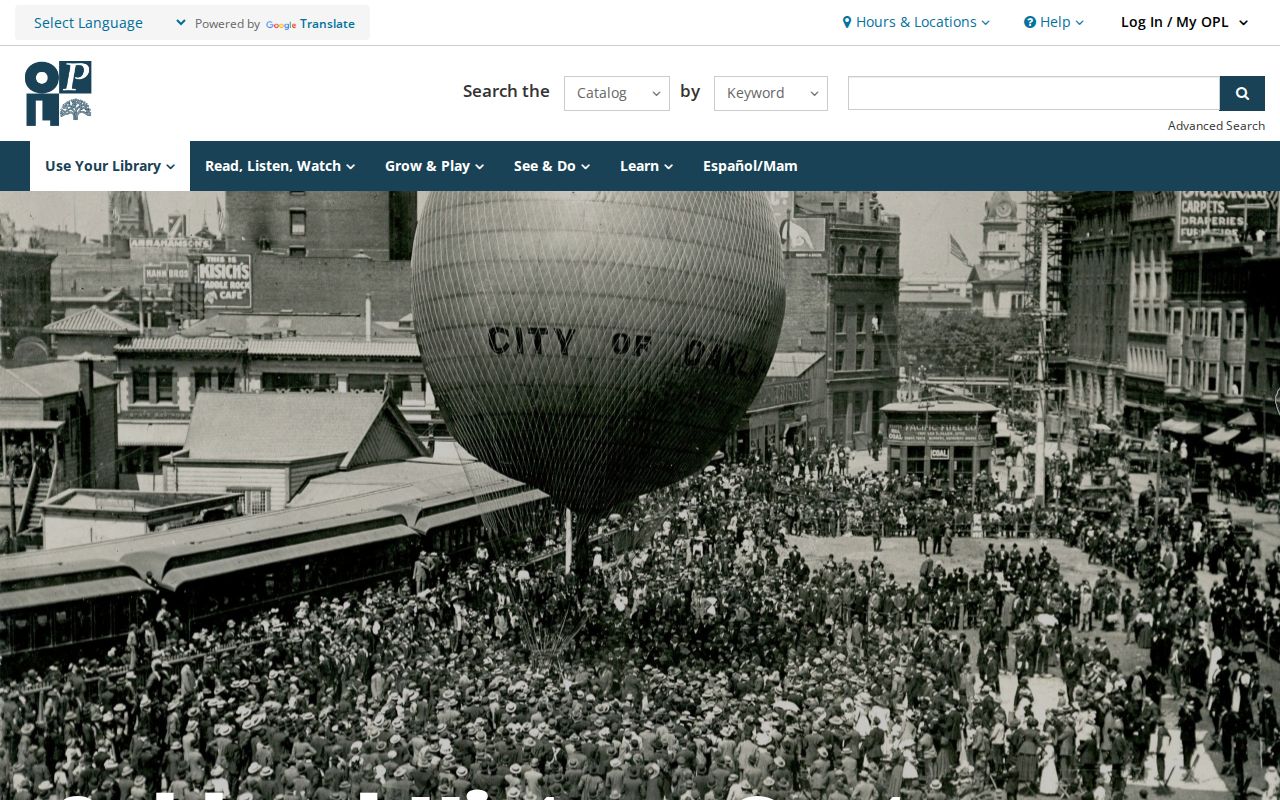
The service image supports a practical choice between an onsite shelf visit and a narrowly worded remote request.
Southern Alameda County Directory Runs
An Alameda County city directory search should not treat Oakland as the whole county. The local shelf includes Polk's Hayward and San Leandro titles for 1948 and 1951, Hayward volumes for 1956/57, 1959, 1962, 1965, 1967, 1969, 1971, and 1976, and San Leandro titles for 1955/56, 1959, and 1965. These are selected runs, so the exact city, year, and publisher need to be written down.
The California State Library's Alameda research guide is a useful companion for city directories, telephone books, and government records. Alameda Free Library also holds Alameda directories from 1869 through 1943, newspapers from 1869, and high-school yearbooks from 1899. The collection that fits a street in Alameda may not be the collection that fits a family in Fremont, Hayward, Livermore, or San Leandro.
The Oakland Library family-history resources add census, voter-register, obituary, and genealogy database context to a city directory search.

The family-history image points to the supporting sources that can test a directory clue without changing the directory entry.
When the city boundary or community name changes, preserve the old address as printed and add the modern city as a research note. That keeps a historical city directory searchable without rewriting the source. The Alameda Museum is another local-history collection to check when an Alameda city question falls outside the Oakland shelf, and the Internet Archive directory browse provides a digitized search view.
Using Alameda County Directories for Family History
A family-history trail works best when each directory entry is treated as a dated point. Start with a known name, address, or year. Copy the line exactly. Then move one volume earlier or later, searching surname variants, spouse names, occupation, and street spelling. Switch to a reverse directory when the address is more stable than the surname.
- Find the earliest useful name or address entry and record the page, title, publisher, and year.
- Follow the person forward and backward, noting each move, spouse, widow mark, business, and gap.
- Use the reverse section to see the same number and nearby numbers when a surname changes.
- Pair directory years with federal census returns through 1950 for ages, relationships, birthplace, occupation, and tenure.
- Close the trail with an obituary, cemetery record, probate file, or certified vital record when the relationship matters.
A person can disappear because of a move, death, unlisted status, a publication gap, or an OCR error. The absence needs a second source. Oakland voter registers from 1867 through 1944, assessor block books from 1877 through 1925, and local newspapers can add context without turning one directory line into proof of every household member.
Alameda Directory Milestones
The publishing history is easier to use when its major changes are kept in a short sequence. The dates below come from the local collection and research history.
- 1869: Oakland city directory publishing begins in the local holdings.
- 1872-1909: Langley, Bishop, and Husted titles create the early publisher chain.
- 1911-1943: Polk-Husted and Polk volumes carry the main twentieth-century Oakland run with stated gaps.
- 1936 onward: selected reverse and criss-cross volumes add address-order research.
- 1973-2020: Haines runs extend selected Oakland and suburban reverse coverage.
That timeline explains why a city directory page can support both genealogy and address history. It also shows where a researcher should stop expecting annual continuity.